The Hidden Admin Cost of Prior Auth Faxing (and How to Make It Less Painful)
Fax-based prior authorization wastes staff time, causes errors, and delays care; online fax tools and workflow fixes cut costs and speed approvals.
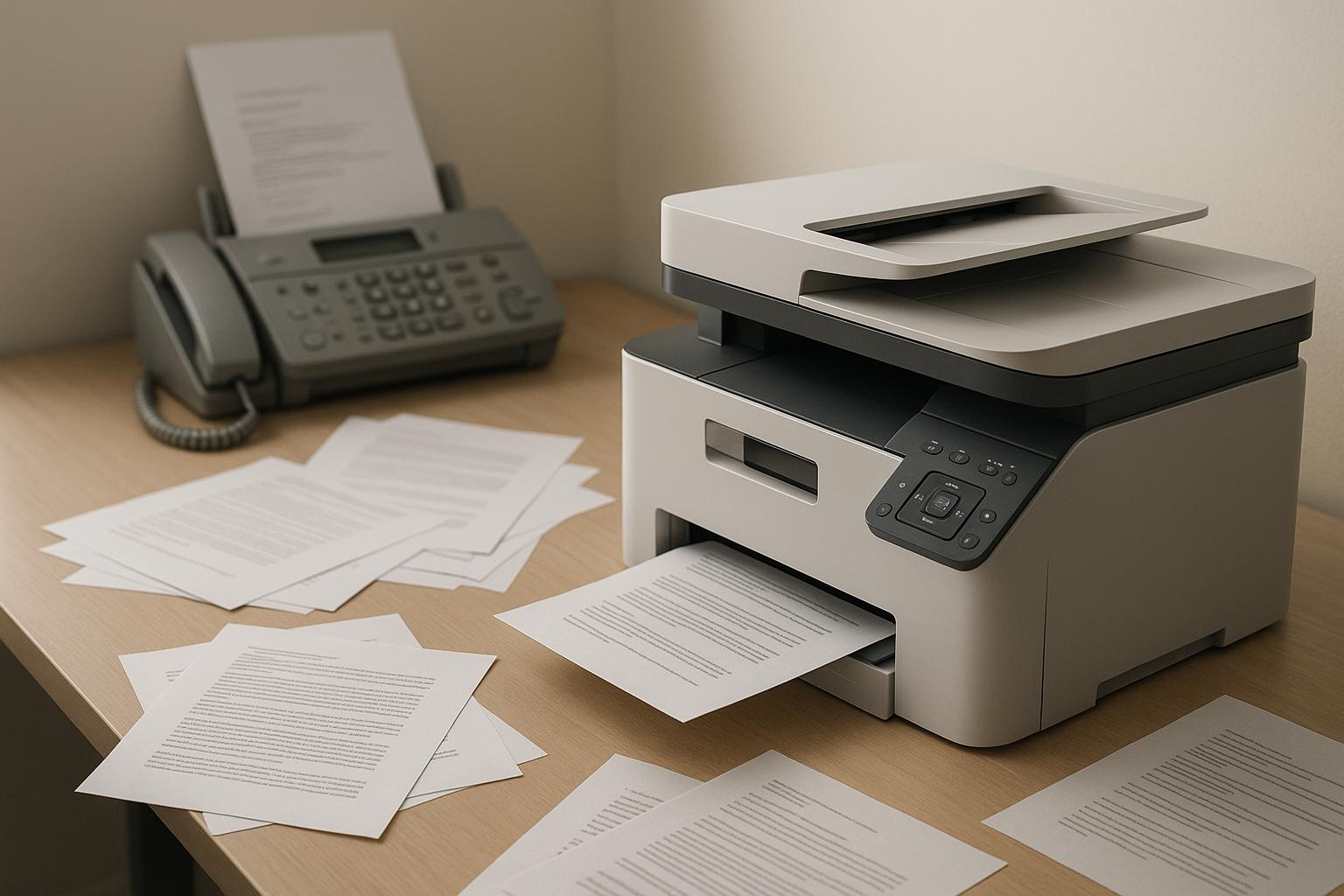
The Hidden Admin Cost of Prior Auth Faxing (and How to Make It Less Painful)
Faxing prior authorizations wastes time, creates errors, and costs clinics more than they realize. Despite being outdated, faxing persists because many payers still rely on it. The process is slow, error-prone, and lacks modern features like real-time tracking or automated retries, leading to delays in patient care and increased administrative work.
Here’s what you need to know:
- Time Wasted: Staff spend hours printing, sending, and following up on faxes, often redoing failed attempts.
- Hidden Costs: Manual workflows reduce productivity, delay approvals, and increase operational expenses.
- Patient Impact: Fax delays can postpone treatments, frustrate patients, and hurt clinic revenue.
- Better Solutions Exist: Online fax tools with delivery tracking, automatic retries, and pay-per-success pricing simplify the process and reduce inefficiencies.
Switching to modern fax tools and improving workflows - like using standardized templates and keeping payer directories updated - can cut down on errors, save time, and improve patient outcomes.
The Current Prior Auth Fax Workflow
Submitting the Fax: A Tedious Process
To send a fax, staff first gather the necessary forms and patient records from their EHR system, print them out, and prepare a cover sheet with the sender and recipient details. If a signature is required, the document is printed again, signed, and then either scanned or faxed.
Once everything is ready, the documents are loaded into the fax machine, and the payer's fax number is manually dialed. This constant switching between digital systems and physical paper creates unnecessary delays and increases the chances of errors - misplaced pages, incorrect dialing, or incomplete faxes. On top of that, the process often fails to provide reliable delivery confirmations, adding another layer of frustration.
Tracking Status: A Game of Guesswork
Traditional fax machines offer little more than a basic receipt to confirm that a transmission was attempted - not that it was successfully delivered. Without real-time updates, staff are left in the dark, often resorting to time-consuming phone calls to verify the fax's status. Long hold times with payers only add to the inefficiency.
If a fax fails or gets lost, the entire process has to be repeated from scratch. Staff must reassemble the documents and resend them, as physical fax machines lack automated retries or detailed logs. This manual approach disrupts workflows and wastes valuable time.
The Hidden Costs of Faxing
Manual faxing isn’t just slow - it’s expensive in ways that aren’t always immediately obvious. The time spent on repetitive tasks, like printing, scanning, and resending, directly impacts staff productivity and delays patient care. Traditional faxing enforces a paper-based workflow, which lacks modern digital conveniences like automated retries and timestamped delivery confirmations.
In contrast, online fax services let you upload files in formats like DOCX, PDF, or images (JPG/PNG, TIFF), incorporate digital signatures, and provide features like automatic retries (typically three attempts) and real-time tracking with timestamps. These capabilities are simply out of reach for physical fax machines.
Compliance is another major issue. Traditional faxing makes it difficult to generate a complete audit trail for regulatory purposes. It also lacks encryption to secure Protected Health Information (PHI) during transmission. Without automatic deletion features, clinics are left managing paper records manually, further increasing the risk of security breaches. These inefficiencies not only slow down operations but also leave clinics vulnerable to compliance issues and data security risks.
The Hidden Administrative Costs of Faxing
Staff Time and Labor Costs
Handling fax requests isn't as simple as it sounds. Each request involves filling out forms, sending the fax, and waiting for confirmation. Multiply this by the dozens - or even hundreds - of authorizations processed every month, and the administrative workload quickly adds up. For clinic coordinators, these repetitive tasks eat up hours that could be better spent on more important responsibilities. In already busy clinics, this added burden can throw off workflows and drive up operating costs. What starts as a small delay often snowballs into larger inefficiencies.
Rejected or Lost Faxes: The Ripple Effect
Faxing isn't foolproof. Busy signals, wrong numbers, or missing pages can cause faxes to fail. Without automated systems to retry, staff have to step in, manually piecing together documents and re-sending them. If a fax disappears entirely, the process becomes even more time-consuming, often requiring staff to call payers to confirm receipt. These interruptions don't just waste time - they disrupt productivity across the board.
Impact on Patient Care and Revenue
When prior authorizations are delayed because of fax issues, the effects are felt everywhere. Procedures might need to be postponed or rescheduled, leaving appointment slots empty and revenue on hold. For patients, these delays can be frustrating enough to make them look elsewhere for care. Over time, the clinic suffers - not just from slower revenue cycles, but from diminished patient satisfaction. The combination of lost time, delayed approvals, and unhappy patients highlights the pressing need for tools that can streamline and verify fax communications efficiently.
How Better Tools Reduce Fax Problems

Traditional Fax vs Online Fax Services for Prior Authorization
Modern online fax tools tackle the inefficiencies of traditional faxing head-on, streamlining operations and addressing common pain points.
Delivery Proof and Status Pages
Online fax services remove the uncertainty by offering real-time status tracking for every transmission. Instead of chasing payers for confirmation, clinic staff can rely on a dedicated status page with timestamped entries and an audit trail. This feature provides verifiable proof of each step in the process, eliminating the need for manual follow-ups.
For prior authorizations, this level of transparency is critical. HIPAA-compliant audit dashboards allow users to export logs as CSV or PDF files, simplifying compliance documentation when payers or auditors request proof. Every fax generates a delivery receipt, indicating success or failure, and includes SHA-256 document hash verification to ensure the integrity of the sent documents. Staff can securely access this information with time-limited links, no account logins required. This automated transparency further boosts efficiency by enabling retry automation.
Automated Email Confirmations and Retries
Automatic retries tackle one of the most frustrating issues: resending failed faxes. When a transmission encounters a busy signal or incorrect number, the system automatically retries - up to three times - without requiring staff involvement. Meanwhile, email notifications keep coordinators updated on the delivery status in real time, eliminating the need for constant monitoring.
This automation reduces errors from missed or forgotten resubmissions. Coordinators can track outcomes directly from their inbox, saving time and minimizing interruptions. The result? Faster turnaround times, fewer mistakes, and less rework. Combined with flexible pricing models, these improvements also help cut unnecessary costs.
Pay-on-Success Pricing Models
Pay-per-fax pricing ensures clinics only pay for successful deliveries, making it easier to manage costs when prior authorization volumes fluctuate. Unlike monthly subscription fees that charge regardless of usage, this model charges a flat rate per fax - but only if it’s delivered. Failed attempts incur no cost, reducing financial waste on undelivered documents.
For example, OneFaxNow offers a HIPAA-compliant online fax service tailored for healthcare providers managing prior authorizations. Their "pay only if delivered" model charges $6.50 for a 5-page fax, but only upon successful delivery. If the first attempt fails, the service includes up to three automatic retries at no extra cost. Payment is processed only if one of these retries succeeds, ensuring clinics avoid paying for undelivered faxes. This pricing approach not only saves money but also provides greater cost transparency for administrative tasks. Learn more about HIPAA faxing and prior authorization use cases.
sbb-itb-0df24da
Process Improvements Clinics Can Make Today
Tackling the challenges outlined earlier doesn't have to be overwhelming. By making a few straightforward adjustments, clinics can ease the administrative strain caused by fax-related inefficiencies. Simple updates to workflows - like improving documentation, organizing contact information, and refining decision-making processes - can save time, reduce errors, and make daily operations smoother.
Standard Cover Sheets and Checklists
Creating consistent cover sheets can go a long way in reducing mistakes and ensuring all necessary information is included. A well-designed template might include key details like:
- Patient's name and date of birth
- Insurance ID
- Requested procedure or medication
- Ordering provider's NPI and contact information
- Clinic callback number
Adding a checklist at the bottom of the cover sheet can further ensure nothing is overlooked. Items like clinical notes, prescriptions or order forms, and supporting lab results or imaging reports can be quickly verified before sending. Storing this template in a centralized location ensures everyone on the team uses the same format, keeping things uniform and efficient.
Centralized Payer Fax Number Directory
Managing payer contact information can be a time sink if it's disorganized. Clinics can save hours by maintaining a centralized, up-to-date spreadsheet of payer fax numbers, categorized by insurance carrier, plan type, and prior authorization department. This directory should include:
- Payer name
- Fax number
- Confirmation phone number
- Last verification date
Assigning one staff member to review and update this directory quarterly helps eliminate the frustration of outdated information and reduces errors caused by incorrect contact details.
Once contact information is in order, clinics can focus on selecting the best method for submitting prior authorizations.
When to Use Electronic PA or Online Faxing
Not all prior authorization requests are created equal, so it's important to choose the right submission method for each situation. Here’s how clinics can decide:
- Electronic portals: Ideal when the payer provides a reliable, integrated system with status tracking for straightforward requests.
- HIPAA-compliant online faxing: Best for payers without electronic submission options, when proof of delivery is needed, or when time-sensitive requests can't wait for potential portal downtime.
For clinics juggling multiple prior authorizations, HIPAA fax services offer secure transmission and a pay-on-success pricing model - charging only when the fax is delivered successfully.
Why OneFaxNow for This Use Case

Streamlining workflows becomes much easier with tools like OneFaxNow. By standardizing cover sheets, keeping payer directories updated, and choosing the right submission method for each request, clinics can drastically cut down on administrative headaches. OneFaxNow supports these efforts with a simple, no-account, pay-per-fax model, ensuring clinics only pay for faxes that are successfully delivered.
Primary CTA: Send a Fax Online - No Account Required
Secondary CTA: Explore HIPAA Fax Options
Conclusion
Prior authorization faxing puts a strain on clinic operations, bogging teams down with repetitive tasks and compliance headaches. These inefficiencies often lead to hidden costs that quietly pile up. In fact, research shows that 30% of healthcare faxes fail to reach their destination1. This results in additional work, frustrated staff, and delays in patient care.
The good news? Clinics don’t need to completely overhaul their processes to see improvements. Simple steps - like using standardized cover sheets, maintaining an updated payer directory, and choosing the best submission method for each request - can ease the administrative load. Pair these strategies with modern online fax tools, which offer features like delivery tracking, automatic retries, and pay-on-success pricing, and the result is a smoother, more efficient workflow. Plus, these tools come with built-in security measures to keep sensitive information safe.
For clinics managing Protected Health Information (PHI), online fax solutions simplify compliance and reduce manual follow-ups. Features like instant Business Associate Agreements, encryption during transmission and storage, and exportable audit logs ensure HIPAA compliance while cutting down on rework and confirmation time.
Moving away from outdated physical fax machines gives clinics a clear advantage. It saves staff hours, reduces errors, and ensures patients get timely care. This shift not only eliminates delays but also transforms hidden administrative burdens into measurable savings. Clinics that adopt these modern tools and processes often see a noticeable drop in prior authorization processing times, allowing them to focus more on delivering quality patient care.
By combining smarter workflows with advanced fax technology, clinics can protect their efficiency while prioritizing what matters most: their patients.
Primary CTA: Send a Fax Online - No Account Required
Secondary CTA: Explore HIPAA Fax Options
FAQs
How can online fax tools make prior authorization easier and faster?
Online fax tools take the hassle out of prior authorization by automating tedious manual processes. With features like real-time status updates, tracking links, and automatic retries, these tools save your team from the frustration of resending faxes or spending hours on hold with payers. Instead of juggling manual logs, email confirmations provide a straightforward way to track progress, while standardized cover sheets and internal directories help minimize mistakes and prevent delays.
By ensuring faxes are sent successfully and eliminating issues like lost documents, these tools boost efficiency and streamline workflows. The result? Faster approvals and a smoother process for your entire team.
What are the hidden costs of traditional faxing in healthcare clinics?
Traditional faxing in clinics carries a range of hidden expenses that can easily slip under the radar. One major cost is staff time. Employees often find themselves bogged down with tasks like hunting for forms, locating contact information, printing, scanning, and resending faxes. On top of that, they may spend long periods waiting on hold with payers just to confirm whether documents were received.
Another issue is lost or rejected faxes, which can create a ripple effect of inefficiencies. These setbacks often lead to rework, delays, and even rescheduled procedures, leaving patients frustrated. Over time, such disruptions can throw off clinic workflows, harm patient satisfaction, and negatively affect revenue.
How does pay-per-success pricing benefit clinics using online fax services?
Pay-per-success pricing provides clinics with a straightforward and budget-friendly approach to handling faxing costs. With this model, you’re charged only for successfully sent faxes, which means no money wasted on failed attempts. This not only reduces unnecessary expenses but also minimizes financial uncertainty.
By eliminating upfront fees and subscription charges, this pricing structure helps clinics maintain better cash flow. It allows them to allocate funds more effectively to areas that need attention. For clinics aiming to simplify their operations while keeping costs under control, this approach offers a practical and reliable solution.